

A calm, step-by-step plan for older adults and caregivers in Tamarac and across Broward County to stay safe before, during, and after a storm.
Hurricane preparedness for seniors in South Florida is not about fear. It is about a clear, calm plan that every family can follow. Atlantic hurricane season runs from June 1 to November 30, and Broward County sits in a corridor that has been hit by named storms again and again. Older adults face the highest risk in a major storm because of mobility limits, medication needs, dependence on electricity for oxygen or refrigerated medicine, and the isolation that can follow a long power outage.
The good news: most of what matters can be prepared in a single weekend. At Tamarac Senior Center, we walk our members and their families through storm planning every year. This 2026 checklist puts the most important steps in one place — the emergency kit, the medication binder, the evacuation plan, transportation, and the Broward County resources your family should know about now, not the day before a storm.
For an older adult, the danger of a hurricane is not only the wind. It is the days that follow. A 72-hour power outage means no air conditioning, no refrigeration for insulin and other medications, no electric medical equipment, and no easy way to refill prescriptions if roads are blocked. Seniors who live alone, who use mobility aids, or who rely on caregivers face an even bigger gap when normal life is interrupted.
A written plan, kept on the refrigerator and shared with at least one family member, reduces every one of those risks. The earlier you build it, the easier it is to follow when a storm watch is announced.
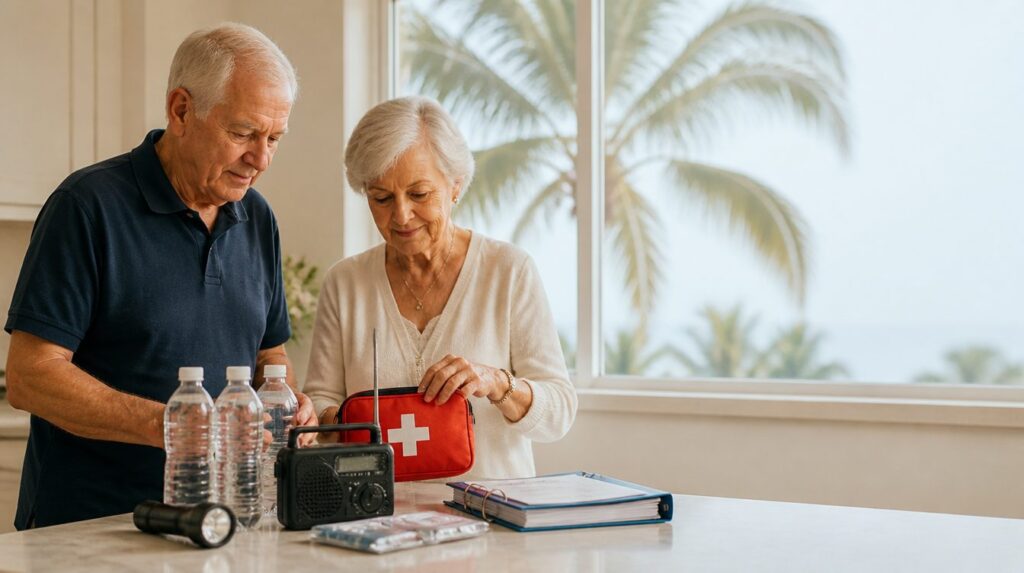
Standard hurricane kits are a good start, but seniors need additions:
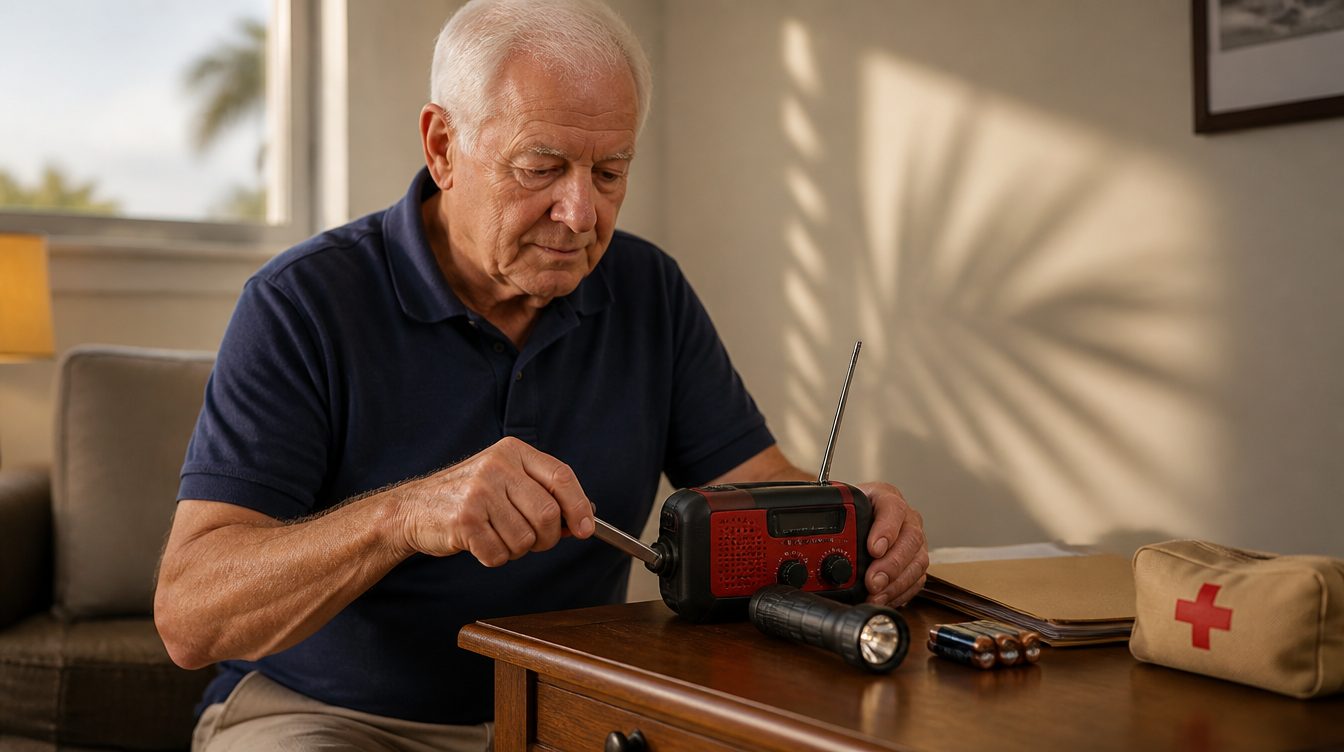
A single binder — paper, not digital — is the most underrated piece of senior hurricane preparedness. Include:
Florida law allows pharmacies to dispense an early refill before a declared storm — ask in writing as soon as a watch is issued.
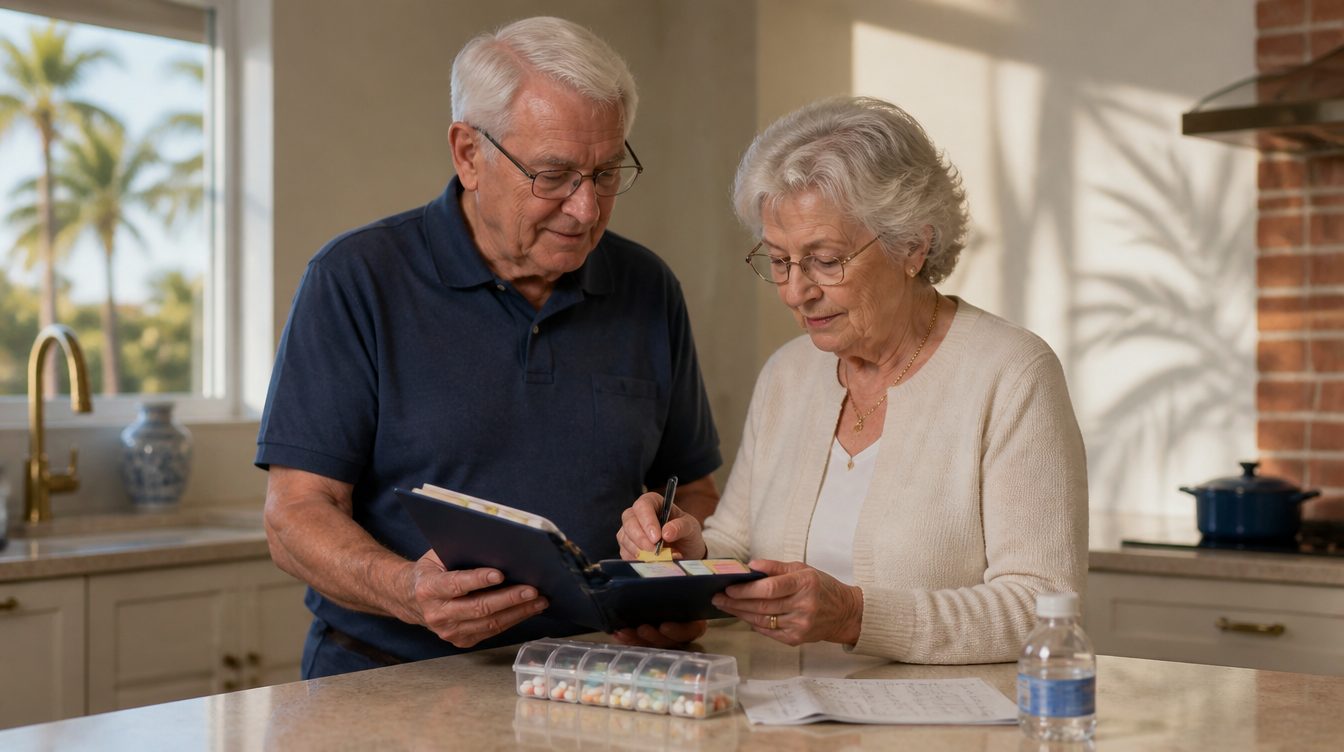
If your loved one uses an oxygen concentrator, CPAP, or refrigerated medication such as insulin, confirm a backup plan:
Broward County operates a free Vulnerable Population Registry for residents who need help evacuating or who require power for medical equipment. Sign up online or by phone in advance of any storm. Registration ensures emergency services know who needs assistance and where to go. Many families do not learn about this until it is too late — do it today, not in August.
Have both a first choice and a backup:
Confirm both options each May. People move, and shelters change.
If your loved one does not drive, transportation is the biggest single source of evacuation stress. Solutions:
Read more: Senior Transportation in Tamarac.
Photograph every important document. Save copies in a waterproof bag in the emergency kit and a second copy on a cloud service or with a trusted family member outside Florida. Include homeowner or renter insurance, flood insurance, Medicare and Medicaid cards, driver license, and a list of every account number and customer service phone line.
Pick a single out-of-state contact — a relative in Georgia, Ohio, or anywhere outside the storm zone. Everyone in the family checks in with that one person. Local phone networks fail; out-of-state texts often go through. Write the number on the binder cover.
Food should be simple, calorie-rich, and require no cooking. Examples: peanut butter, crackers, canned tuna, canned fruit, granola bars, shelf-stable milk. Rotate the supply every six months so nothing expires. Keep a manual can opener in the kit.
You will not get every detail right. Storms are unpredictable, and even the best plan needs adjustments. The goal is not perfection — it is readiness. A senior who has a binder, a kit, two destinations, and a phone tree is dramatically safer than one who does not, regardless of how a particular storm tracks. Build it once. Refresh it each May. Sleep better.
Atlantic hurricane season officially runs from June 1 through November 30. The peak risk for Broward County is mid-August through October.
FEMA recommends at least one gallon per person per day for at least three days. For seniors in South Florida, plan for a full seven days to cover prolonged outages and post-storm cleanup delays.
It is a free registry for residents with medical needs or mobility limits who may need help during an evacuation. Registration ensures emergency teams know who needs assistance and helps secure a spot at a special-needs shelter.
Yes. Bring at least a two-week supply in original labeled containers, plus the full medication list, photo ID, and insurance cards. Special-needs shelters have nurses on site.
Register with the Vulnerable Population Registry, alert your equipment provider before storm season, and either evacuate to a home with a generator or to a special-needs shelter that can power medical devices.
A trusted day center can help verify medication supplies, support family planning, coordinate transportation, and check on members after a storm. Call Tamarac Senior Center at (954) 694-1100 for guidance.
If you would like help building a hurricane plan for an older parent or grandparent in Broward County, we are happy to walk you through it. Call (954) 694-1100 or visit us at 6570 N University Dr, Tamarac, FL 33321, Monday through Saturday, 8 AM – 4 PM. The best time to prepare is right now — not the day the cone shifts.