

In this article
- What is the difference between loneliness and social isolation?
- Why does loneliness matter for health?
- What are the signs that a senior is lonely?
- Why do the holidays make loneliness harder?
- What helps a lonely senior at home?
- How does an adult day center help with loneliness?
- Where can a family find support in Broward?
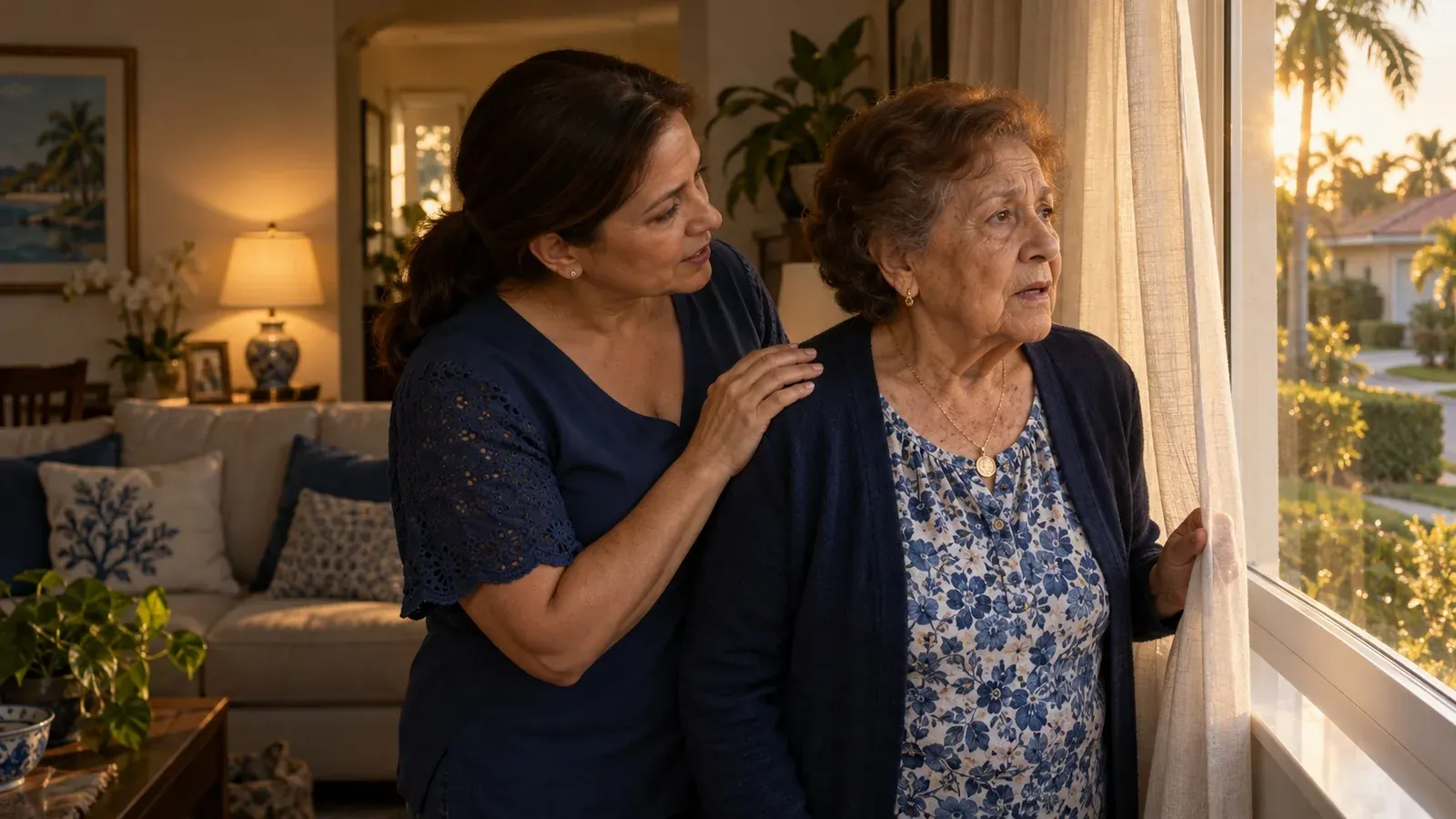
Loneliness in seniors in Broward County is easy to miss because it rarely looks like a problem. A parent who says “I’m fine” on the phone may have spoken to no one else all week. The holidays tend to sharpen the gap between how things were and how they are now.
This guide explains the difference between loneliness and social isolation, the signs to watch for, why November and December are harder for many older adults and what actually helps, from small daily habits to a structured day at an adult day center like ours in Tamarac.
Key Takeaways- Loneliness is the painful feeling of being alone. Social isolation is having few social contacts. A person can have one without the other.
- The National Institute on Aging links loneliness and social isolation with higher risks of heart disease and cognitive decline, and of depression.
- Warning signs include withdrawing from usual activities, changes in eating or sleeping, and a home that is less cared for.
- Regular calls, standing visits, rides and a place to go each week may help more than one big gesture.
- Tamarac Senior Center is a bilingual adult day center for adults 60 and older, open Monday to Friday, 8 AM to 4 PM, with door-to-door transportation.
What is the difference between loneliness and social isolation?
Loneliness is the distressing feeling of being alone or cut off. Social isolation is the lack of social contact and having few people to interact with regularly. The National Institute on Aging describes them as different but related, and one can exist without the other.
A widow with a full calendar can still feel lonely. A man who lives alone and likes it may be isolated without feeling distressed. That is why asking how someone feels matters as much as counting how many people they see.
Why does loneliness matter for health?
Studies cited by the National Institute on Aging link loneliness and social isolation with higher risks of health problems such as heart disease and cognitive decline, and of depression. The Institute also notes that people who are lonely or isolated tend to be less healthy and may be hospitalized more often. These are associations, not guarantees for any one person.
The NIA has a short guide, tips for staying connected, and a news summary on the health risks of social isolation and loneliness in older people.
What are the signs that a senior is lonely?
The most common signs are pulling away from things they used to enjoy, changes in eating or sleeping, and a home that is less cared for than before. You may also hear a parent talk about the past more than usual, or call at odd hours just to talk.
- Stopped going to church, clubs, appointments or family gatherings.
- Eating less, skipping meals or sleeping much more or much less.
- A quieter voice on the phone, or very long calls with no clear reason.
- Less attention to grooming, mail, bills or the house.
- More sadness, irritability or comments like “nobody needs me.”
These signs can also point to depression or a health problem, so mention them to your parent’s doctor. For emotional distress or a mental health crisis, call or text 988, and press 2 for Spanish. If there is immediate danger or a medical emergency, call 911.
Why do the holidays make loneliness harder?
The holidays highlight who is missing. Many older adults have lost a spouse, friends or siblings, and children and grandchildren may live far away. Cooking, traveling and gatherings can also become harder with age, so traditions shrink just as the season puts them on display.
- Family members who used to host may no longer be able to.
- Mobility, vision or driving limits make evening events harder to attend.
- Social media and television show gatherings that feel out of reach.
- Shorter days can make the afternoons feel long and quiet.
Planning ahead helps. Put a few specific dates on both calendars, from a phone call on Thanksgiving to a visit in December, so the plan does not depend on one big day.
What helps a lonely senior at home?
Small, repeated contact may help more than one big gesture. A call at the same time each day, a standing weekly visit and a ride to a regular activity give a parent something to count on. Ask about their stories, not just their health, and invite them to help with something, such as a recipe.
- Set a rhythm. A call every morning and a visit every Sunday are easier to keep than promises.
- Offer rides. Not driving is one of the biggest reasons older adults stay home.
- Share the load. Ask siblings and neighbors to take a day each.
- Try video calls. A tablet set up once can bring grandchildren into the kitchen.
- Look for a regular place to go. A weekly group matters more than an occasional outing.
If you are the one providing most of the care, you matter here too. Our post on caregiver burnout and respite care in Broward covers how to get relief. Our Spanish-language guide to la soledad en adultos mayores is there for families who prefer it.
How does an adult day center help with loneliness?
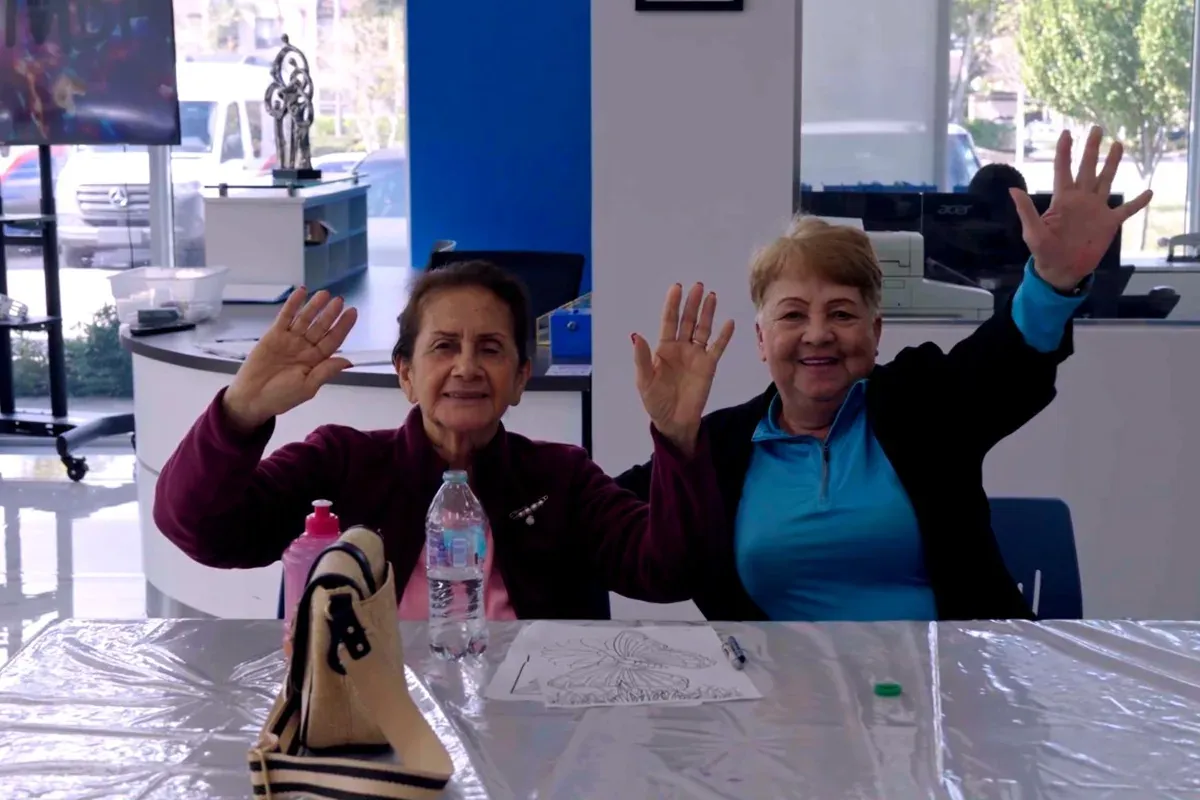
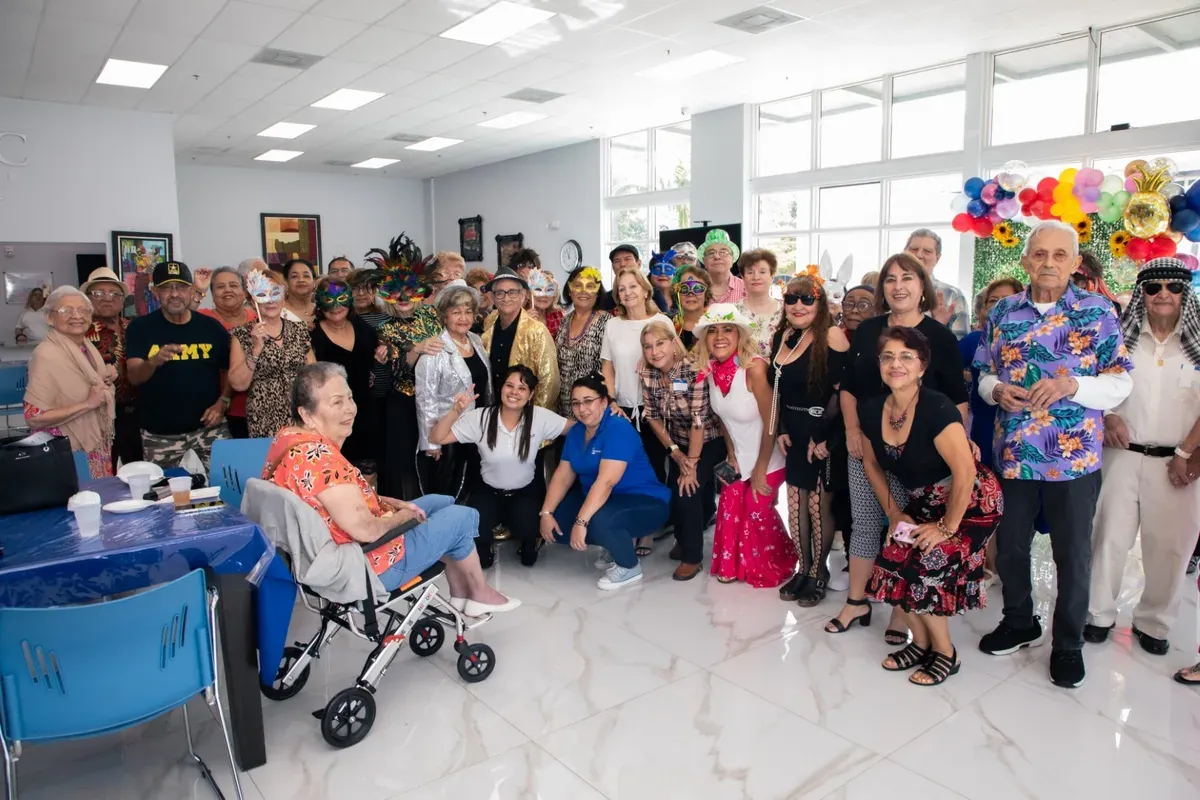
An adult day center gives a senior a reason to leave the house and a group of people to see each week. At Tamarac Senior Center, members spend the day with staff and other members for group activities, wellness sessions, meals and conversation. We are a licensed adult day center for adults 60 and older, open Monday to Friday, 8 AM to 4 PM.
- Social and health programs with games and music.
- Breakfast, lunch and snacks in a shared dining area, so meals are not eaten alone.
- door-to-door transportation in the morning and afternoon.
- A bilingual program, where about 70 percent of members speak Spanish.
Call (954) 694-1100 and we will set up a visit. We can also explain how to check whether your parent’s coverage applies.
Activities change from week to week, so the activities calendar is the best way to see what is coming. For more on what a typical day includes, read our post on activities seniors enjoy in adult day care and our guide to memory-stimulating activities for seniors.
Where can a family find support in Broward?
Several free lines can point a family to services. The Eldercare Locator, run by the Administration for Community Living, connects people to local aging services. The Florida Department of Elder Affairs runs the Elder Helpline at 1-800-963-5337. If loneliness has turned into hopelessness, call or text 988.
- Eldercare Locator: 1-800-677-1116 or eldercare.acl.gov.
- Florida Elder Helpline: 1-800-963-5337, from the Department of Elder Affairs.
- 988 Suicide and Crisis Lifeline: call or text 988, free and confidential, and press 2 for Spanish.