


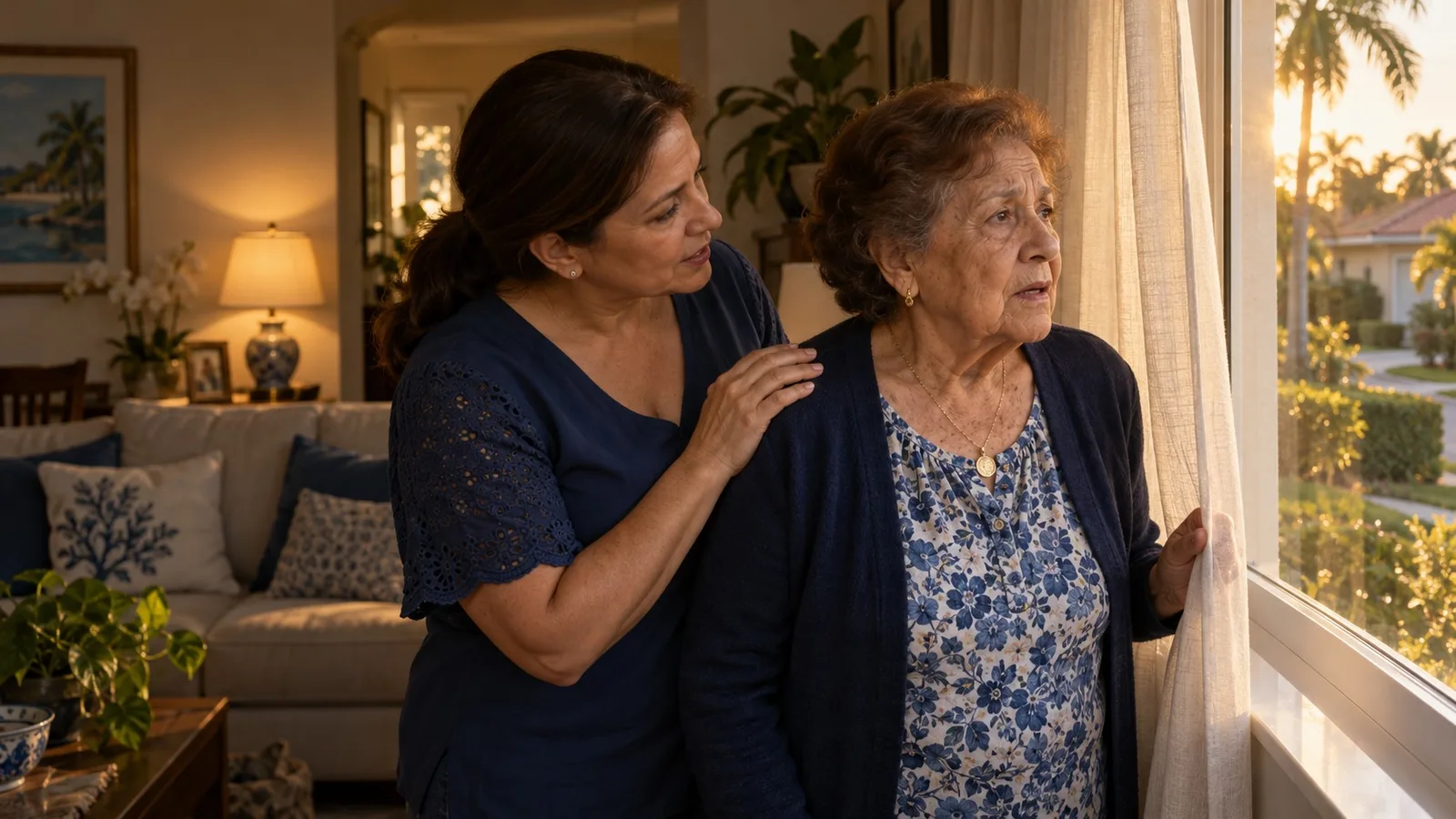

How to recognize the signs early, why caregiver burnout matters for the whole family, and how respite care in Tamarac and across Broward can help.
Caregiver burnout rarely arrives in one big moment. It builds quietly across weeks and months as an adult child, spouse, or other family member carries the daily weight of caring for an older loved one. By the time most caregivers notice that something is wrong, the warning signs have been there for a while — in the small things, like skipped meals, lost weekends, and shortened patience. For families in Tamarac, Sunrise, Coral Springs, Plantation, Lauderhill, Margate, and across Broward County, the consequences are real and worth taking seriously.
You are not weak for feeling exhausted. Caregiving for an aging parent is one of the most demanding roles a family member can take on. At Tamarac Senior Center, we work with caregivers every day, and we have learned that the most important step is naming what is happening. This guide explains the eight most common warning signs of caregiver burnout, the respite care options available in Broward County, and how adult day care can give a caregiver the breathing room they need without sacrificing their parent's care.
Caregiver burnout is not a personal failure. It is a predictable response to a long-term demand that has no natural off switch. Research from the Family Caregiver Alliance estimates that roughly 40 to 70 percent of family caregivers show clinically significant symptoms of depression. Burnout affects sleep, blood pressure, immune health, work performance, and the quality of every relationship in the household. Most importantly, a burned-out caregiver eventually cannot provide the care their loved one needs. Protecting the caregiver protects the senior.

The first sign is rarely dramatic. It is waking up tired even after a full night, struggling to start the day, and feeling that no amount of rest restores you. This is the body's signal that mental and emotional load has exceeded recovery.
Short fuses with a spouse, kids, coworkers, or the parent you are caring for is a classic sign. Burnout shrinks emotional bandwidth. The things you would have shrugged off six months ago now feel like the final straw.
Canceled plans, ignored texts, and dropped hobbies. Social withdrawal feels protective in the short term — you save energy by saying no — but it removes the very supports that prevent burnout in the first place.
Caregivers often skip meals, overeat for comfort, or lose weight without trying. Sleep becomes light, broken, or anxious. These are physical fingerprints of long-term stress.
Chronic stress suppresses the immune system. Caregivers who are sick more often than usual — colds, sinus infections, slow-healing cuts — are often deeper into burnout than they realize.
Feeling guilty for going to lunch with a friend, finishing a workout, or sleeping in is one of the most common and most damaging signs. Caregiver guilt is so consistent that mental health professionals consider it a near-universal symptom.
If you find yourself losing track of conversations, forgetting appointments, or rereading the same email three times, that is cognitive fatigue. It is reversible — but only with rest.
If most days feel heavy, if the future feels closed off, or if you have thoughts of self-harm, this is no longer burnout. It is a medical concern. Reach out to a primary care provider or call the 988 Suicide and Crisis Lifeline. You are not alone, and there is real help available.
"Respite care" simply means any service that gives a primary caregiver structured time off while a loved one is safely cared for. In Broward County, four main options are available:
Florida Medicaid's Long-Term Care Program can cover several of these options. See our companion guide: Does Medicaid Cover Adult Day Care in Florida?

For most families, adult day care is the most sustainable form of respite. The reasons are simple. The caregiver gets predictable weekday hours to work, rest, attend their own medical appointments, or simply enjoy a quiet coffee. The senior gets structured activity, meals, social engagement, supervision, and transportation in a setting designed for them. Both sides benefit. Families consistently report that within four to eight weeks of starting an adult day program, sleep improves, conflicts decrease, and the household calm returns.
Two more guides for caregivers: sundowning in seniors and what helps at home, and the difference between a senior center and adult day care.
Caregiver burnout is a state of physical, emotional, and mental exhaustion that develops in family members who carry the long-term load of caring for an older or chronically ill loved one. It is well-documented and reversible with rest and support.
The Family Caregiver Alliance estimates that 40 to 70 percent of family caregivers show clinically significant symptoms of depression, and a large share meet the diagnostic criteria for major depression. The risk rises with hours of weekly caregiving and length of the role.
Adult day care is one form of respite care. "Respite care" is the broader umbrella covering any service that gives a primary caregiver time off, including in-home aide visits, residential short stays, and adult day programs.
The Florida Medicaid Long-Term Care Program covers several forms of respite, including adult day health care, in-home aide hours, and short-term residential respite. Eligibility is based on functional need and income.
Frame it as a social or activity program first, not as care. Many seniors who initially resist describe their first few weeks as a positive social experience. Tamarac Senior Center welcomes families to schedule a tour and try a day before committing.
Most families report meaningful relief within four to eight weeks. Predictable weekday hours create the steady rest that reverses chronic fatigue and emotional fraying.
You do not have to carry this alone. If you would like to talk through respite care options for your family in Broward County, call (954) 694-1100 or visit us at 6570 N University Dr, Tamarac, FL 33321, Monday through Saturday, 8 AM – 4 PM. We will listen first, then help you understand the steps.